Introduction to Website Development
Website development processes.
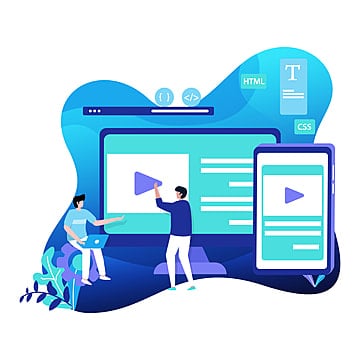
Website development emphatically refers to the tasks and processes involved in designing, creating and maintaining a website. This includes everything from markup and coding to scripting, network configuration,and CMS development.
If you want to get started with web development, a big part of that will be learning various programming languages. Depending on your focus, these could be front-end languages like HTML, CSS, and JavaScript or back-end languages like Python, PHP, Java, Ruby, and so on.
However, I don't think learning programming languages is the only part of website development. You'll also need to learn how the web works at a basic level, especially if you want to go into back-end website development.
I'll talk about some of these areas when I take you through roadmaps for both front-end and back-end development.
Why is web development important?
Can you believe that we're part of a world where over 5.52 billion people are connected through the internet? That's more than half of our global population actively engaging in research, connection, education, and entertainment through this incredible digital universe.
Given the rapidly increasing number of internet users, it’s no surprise that web development is a rapidly expanding industry.
Between now and 2033, the employment of web developers is expected to grow by 8%, which is faster than most other technology careers. It‘s an exciting time to be in this field, and I’m thrilled to be part of this dynamic industry.
Web Development vs. Web Programming
Web development and web programming sound very similar — and they are. But, there’s one very important distinction.
Web development refers to the overall process of creating websites or web applications, including the project’s design, layout, coding, content creation, and functionality. It involves using a combination of programming languages, tools, and frameworks to bring a website or web application to life. Web development may also encompass project management activities, such as fielding development requests from stakeholders or freelance clients.
Web programming, on the other hand, specifically refers to the coding and scripting of a website, whether the front-end or back-end. It primarily involves writing code to handle data, process user inputs, and generate dynamic content. A web programmer will rarely, if ever, handle a large web development project from end to end. They may build a certain section of a site or troubleshoot bugs.
Understanding this difference has been crucial in my career, allowing me to appreciate the depth and breadth of skills required in the world of web creation. It's a reminder of the diverse talents and expertise that come together to make the digital world what it is today.
1. What is a website?
Websites are files stored on servers, which are computers that host (fancy term for “store files for”) websites. These servers are connected to a giant network called the internet.
Now, how do we access these websites? This is where browsers come into play. Browsers are computer programs that load websites via your Internet connection, such as Google Chrome or Safari, while the computers used to access these websites are known as “clients.”
2. What is an IP address?
I was always fascinated by how the Internet knows where to send data. The answer lies in understanding IP addresses. To access a website, you need to know its Internet Protocol (IP) address. An IP address is a unique string of numbers. Each device has an IP address to distinguish itself from the billions of websites and devices connected via the Internet.
If this sounds new to you, that‘s because you’ve been using domain names to reach websites. While you can access a website using its IP address, most internet users prefer to use domain names or by going through search engines.
Domain names are connected to website server IPs using something called the Domain Name System (DNS). If you want to be a web developer, I think it's essential to understand how DNS works.
Pro tip: To find your device’s IP address, you can also type “what’s my IP address” into your search browser.
3. What does HTTP mean?
HyperText Transfer Protocol (HTTP) is what connects our website request to the remote server that houses all website data. It’s a set of rules (a protocol) that defines how messages should be sent over the internet. It allows us to jump between site pages and websites.
If I type a website into my web browser or search for something through a search engine, HTTP provides a framework so that the client (computer) and server can speak the same language when they make requests and responses to each other over the internet.
It’s essentially the translator between you and the internet. HTTP reads our website request, reads the code sent back from the server, and translates it for us as a website.
Understanding HTTP is important for all aspects of web development, but I think it's especially essential if you want to get into back-end development.
4. What is coding?
Coding refers to writing code for servers and applications using programming languages. They’re called “languages” because they include vocabulary and grammatical rules for communicating with computers. They also include special commands, abbreviations, and punctuation that can only be read by devices and programs.
All software is written in at least one coding language, but languages vary based on platform, operating system, and style. All languages fall into one of two categories: front-end and back-end.
Pro tip: Sometimes, you'll see that businesses are seeking a full stack developer. This means that you have expertise in both the front and back end.
5. What does front-end mean?
Front-end (or client-side) is the side of a website or software that you see and interact with as an Internet user. When website information is transferred from a server to a browser, front-end coding languages allow the website to function without having to continually “communicate” with the internet.
Front-end code allows users to interact with a website and play videos, expand or minimize images, highlight text, and more. Web developers who work on front-end coding work on client-side development.
6. What does back-end mean?
On the contrary, the back-end (or server-side) is the side that you don’t see when you use the internet. It’s digital infrastructure. To non-developers, it looks like a bunch of numbers, letters, and symbols.
There are more back-end coding languages than front-end languages. That’s because browsers — at the front end — only understand HTML, CSS, and JavaScript. Meanwhile, a server — at the back end — can be configured to understand pretty much any language.
7. What is a CMS?
A content management system (CMS) is a web application or a series of programs used to create and manage web content. (Note: A CMS isn't necessarily the same thing as a site builder, such as Squarespace or Wix.)
While not required to build a website, using a CMS makes things easier. It provides the building blocks (like plugins and add-ons) and lets you create the structure with your code.
Pro tip: Your CMS is often used for ecommerce and blogging, but it's useful for all types of websites. I think it can be especially helpful if you need to display and organize large amounts of data.
8. What is cybersecurity?
There are always malicious actors looking to find vulnerabilities in websites to expose private information, steal data, and crash servers. Cybersecurity is the practice of securing data, networks, and computers from these threats.
The methods used by hackers are constantly evolving, as are the security measures taken to defend against them. Failing to understand how your site could be targeted could result in disaster.
As a result, a basic understanding of cybersecurity best practices is critical for effective web development. You should also carry out security audits on a consistent basis. This will ensure that your website doesn't fall victim to bad actors attempting to steal your information.
1. Front-End Development
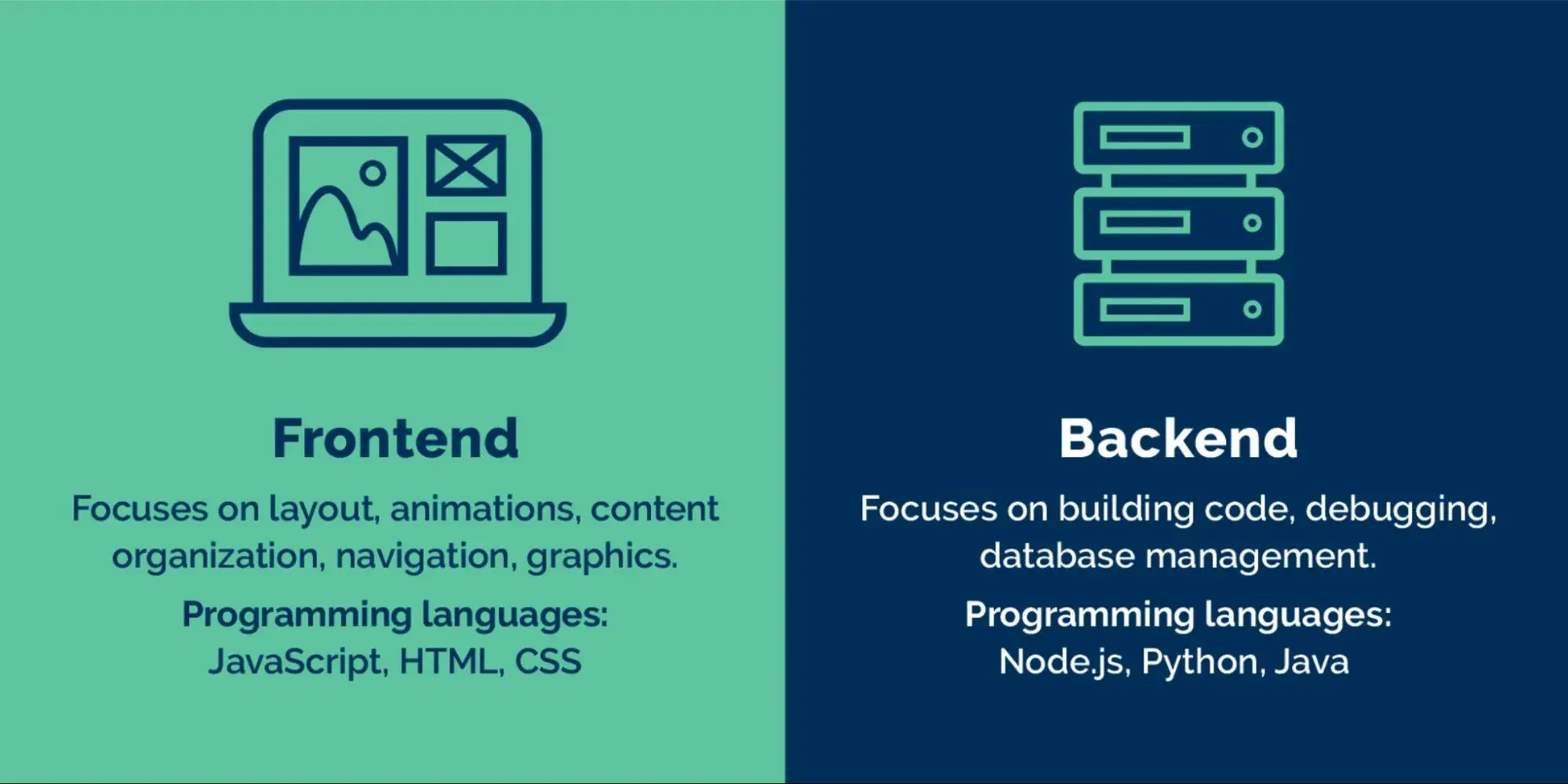
Front-end developers work on the client- or user-facing side of websites, programs, and software — in other words, what users see. They design and develop the visual aspects, including the layout, navigation, graphics, and other aesthetics.
The main job of these developers is to build interfaces that help users reach their goals. They also often work on the user experience aspect of their projects.
2. Back-End Development
If the front end is what users see, the back end is what they don’t. Back-end web developers work on the servers of websites, programs, and software to make sure everything works properly behind the scenes.
These developers work with systems like servers, operating systems, APIs, and databases and manage the code for security, content, and site architecture. They collaborate with front-end developers to bring their products to users.
3. Full Stack Development
Full stack developers work in both the front-end and back-end sides of a website. They can create a website, application, or software program from start to finish. “Stack” refers to the different technologies that handle different functionalities on the same website, like the server, interface, etc.
Because full stack developers require years in the field to build the necessary experience, this role is often sought after by companies looking to build or update their websites. This developer's all-around knowledge helps them optimize performance, catch issues before they occur, and help team members understand different parts of a web service.
4. Website Development
Website developers can be front-end, back-end, or full stack developers. However, these professionals specialize in building websites, as opposed to mobile applications, desktop software, or video games.
5. Desktop Development
Desktop developers specialize in building software applications that run locally on your device, rather than over the Internet in the web browser. Sometimes, the skill set of these developers overlaps with web developers if an application can run both online and off.
6. Mobile Development
Mobile developers build applications for mobile devices such as smartphones or tablets. Mobile apps operate much differently than other websites and software programs, thus requiring a separate set of development skills and knowledge of specialized programming languages. (Psst: Even if you are not building a mobile application, you should aim to make your website mobile-friendly!)
7. Game Development
Game developers specialize in writing code for video games, including console games (Xbox, PlayStation, etc.), PC games, and mobile games — which means this specialty overlaps somewhat with mobile development.
8. Embedded Development
Embedded developers work with all hardware that isn't a computer (or, at least, what most of us imagine as “computers” with a keyboard and screen). This includes electronic interfaces, consumer devices, IoT devices, real-time systems, and more.
With a recent rise in interconnected devices — as seen with smart appliances, Bluetooth technologies, and virtual assistants — embedded development is becoming an in-demand practice.
9. Security Development
Security developers establish methods and procedures for securing software programs or websites. They typically work as ethical hackers, trying to “break” websites to expose vulnerabilities without intending harm. They also build systems that discover and eradicate security risks.
Front-End Web Development Languages
As I've already discussed, front-end web development focuses on creating the visual and interactive elements of a site. It involves designing and building the user-facing side — what you see, essentially, when you pull up a site in a web browser.
In my perspective, front-end development is likely the “easiest” way to begin a career in web development. That said, as with any other aspect of this field, it will have a learning curve. I'll discuss this in the next section when I share a general roadmap for getting started with front-end web development.
Here are some of the most popular front-end web development languages. Having an understanding of these will be paramount as a front-end developer.
HTML (Hypertext Markup Language)
HTML is likely the language you first thought of when it comes to web development, and with good reason: HTML is the backbone of any web page. It provides both semantic structure and defines the elements of a website, such as headings, paragraphs, images, and links. Web developers use HTML to give content a proper layout before customizing it.
CSS (Cascading Style Sheets)
If HTML is the backbone of a site, then CSS is the muscle. CSS is responsible for styling the visual appearance of a website. It allows developers to customize colors, fonts, layouts, and other design elements. With CSS, you can also create responsive web pages that adapt to different screen sizes.
While you can always write your own CSS from scratch, there are also lots of CSS frameworks that can help you more quickly and easily style your website.
JavaScript
JavaScript is a dynamic programming language that adds interactive elements to web pages, such as dropdown menus, sliders, forms, and animations.
JavaScript is widely used for client-side scripting (that is, the script runs on the client’s browser and not on the server that hosts the website). JavaScript generally enhances the user experience by making websites more dynamic and engaging.
There are also a number of popular JavaScript frameworks and libraries that can help you, including jQuery and React.
These languages play a crucial role in creating visually appealing, intuitive, and interactive websites. Don’t underestimate them: A website may have the best back-end structure, but unless the UI is modern, interactive, and user-friendly, it won’t be as appealing to a visitor.
Did you find this ICT insight helpful?