Python: The Unified Backbone of Cybersecurity and Artificial Intelligence
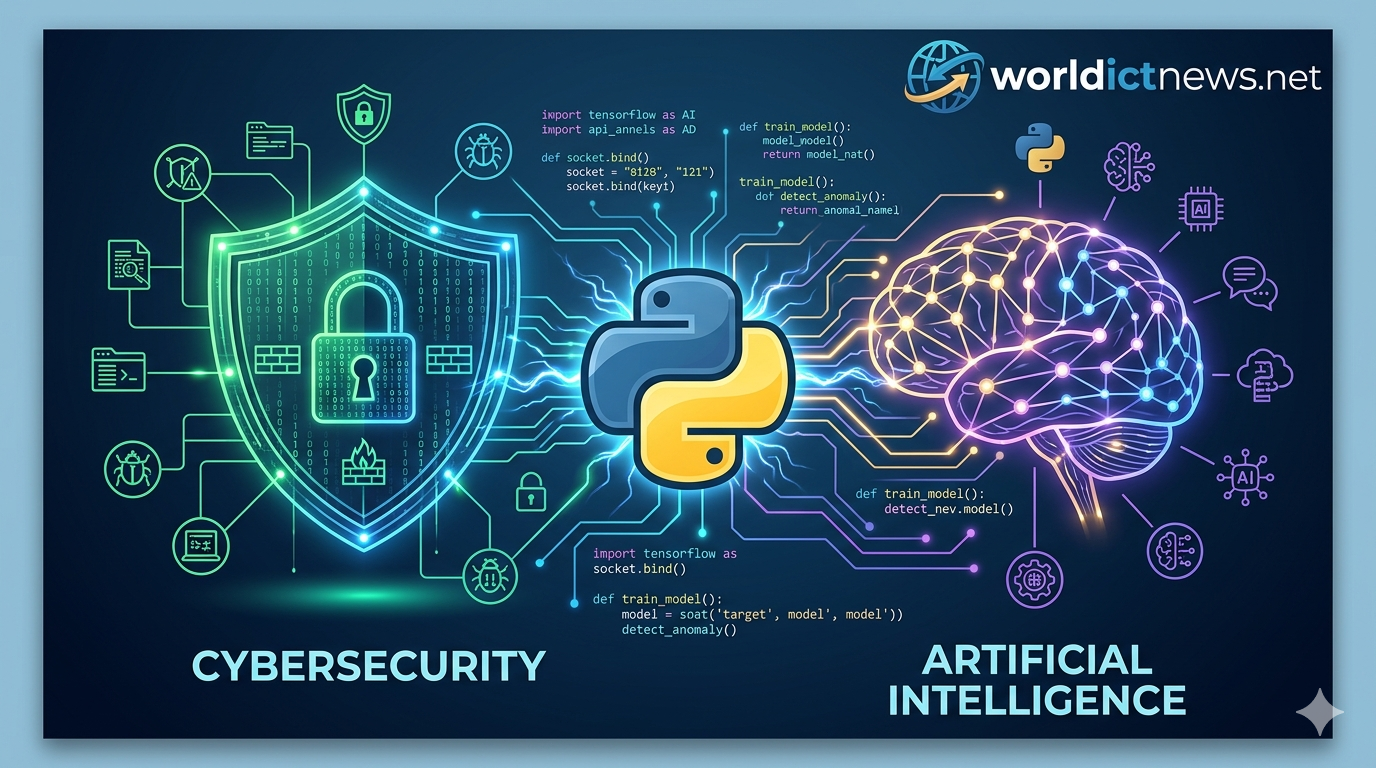
Python: The Unified Backbone of Cybersecurity and Artificial Intelligence.
In the modern technology landscape, two domains stand out for their profound impact on global security and economic evolution: Cybersecurity and Artificial Intelligence (AI). Interestingly, these fields are increasingly dependent on each other. As cyber threats become more complex, defending digital networks requires the speed and adaptability of AI. Conversely, securing complex machine learning pipelines from adversarial tampering has become a foundational challenge in modern engineering.
At the intersection of these fields sits a single common denominator: the Python programming language.
Python has evolved from its origins as a basic scripting language into the primary computational language for both security engineers and data scientists. Its transition into an industry standard is not accidental. This article examines the architectural traits that make Python indispensable, its specific applications within cybersecurity and AI, and how its dual mastery is reshaping digital defense networks.
The Blueprint of Ubiquity: Why Python Rules Both Sectors
The concurrent dominance of Python in two entirely separate engineering fields stems from several structural advantages designed directly into the language.
┌────┐
│ WHY PYTHON RULES THE TECH │
└─┬──┘
│
┌──┼──┐
▼ ▼ ▼
┌───┐ ┌───┐ ┌───┐
│ READABILITY │ │ C-LEVEL SPEED │ │ EXTENSIVE VENDOR │
├──┤ ├─┤ ├──┤
│ • Clean syntax │ │ • Wrapper for C │ │ • Massive ecosystem│
│ • Rapid prototyping│ │ • NumPy/PyTorch │ │ • Scapy, PyCrypt │
└───┘ └───┘ └───┘
1. Syntax Simplicity and Rapid Prototyping
In cybersecurity, time is the ultimate currency during an active breach response. Similarly, in AI research, the ability to rapidly iterate on an experimental hypothesis defines competitive advantage. Python's clear syntax mimics standard English, minimizing boilerplate code. This lets engineers focus on solving logic problems rather than parsing memory pointers or debugging missing semicolons.
2. The Power of "Glue Language" Performance
A frequent criticism of Python is its execution speed compared to compiled languages like C++ or Go. However, Python addresses this limitation by functioning as an exceptional "glue language."
The underlying performance-heavy computation in Python packages is actually written in C or C++. Python provides a clean, highly readable wrapper interface over these compiled binaries. For example, when an AI model processes multidimensional arrays using NumPy or PyTorch, the operations run at near-native C speeds.
3. An Extensive Ecosystem of Specialized Packages
Python boasts a highly comprehensive repository of pre-built modules. Instead of constructing low-level packet sniffers or backpropagation algorithms from scratch, developers can instantly import robust, battle-tested solutions:
For Security: Libraries like
Scapy(packet manipulation),Paramiko(SSH connections), andCryptographyhandle complex protocols natively.For Artificial Intelligence: Ecosystems like
TensorFlow,PyTorch,Scikit-Learn, andHugging Face Transformersprovide ready-made access to cutting-edge machine learning research.
Part I: Python as the Swiss Army Knife of Cybersecurity
In cybersecurity, Python is heavily used across offensive penetration testing, defensive security operations, and digital forensics.
┌─────┐
│ PYTHON IN CYBERSECURITY OPERATING │
├───┬────┬──┤
│ OFFENSIVE │ DEFENSIVE │ FORENSICS │
├─┼──┼──┤
│ • Custom Scanners │ • Automated SIEM │ • Log Parsing │
│ • Exploit Dev │ • Firewall Rules │ • Volatility │
│ • Credential Test │ • Threat Hunting │ • Registry Scan│
└──┴──┴──┘
1. Offensive Security and Penetration Testing
Security professionals must routinely think like attackers to uncover infrastructure vulnerabilities. Python plays a central role in automating network reconnaissance and weaponized exploit delivery:
Custom Port Scanning: While tools like Nmap exist, a pentester frequently requires a customized script to scan obscure protocol structures. Using Python’s native
socketlibrary, an engineer can write an asynchronous scanner in under 20 lines of code.Credential Stuffing and Brute Forcing: Security specialists use the
requestslibrary to build multi-threaded authentication test scripts. These tools stress-test web applications by evaluating password strengths against known corporate credential databases.
2. Security Operations (SecOps) and Automation
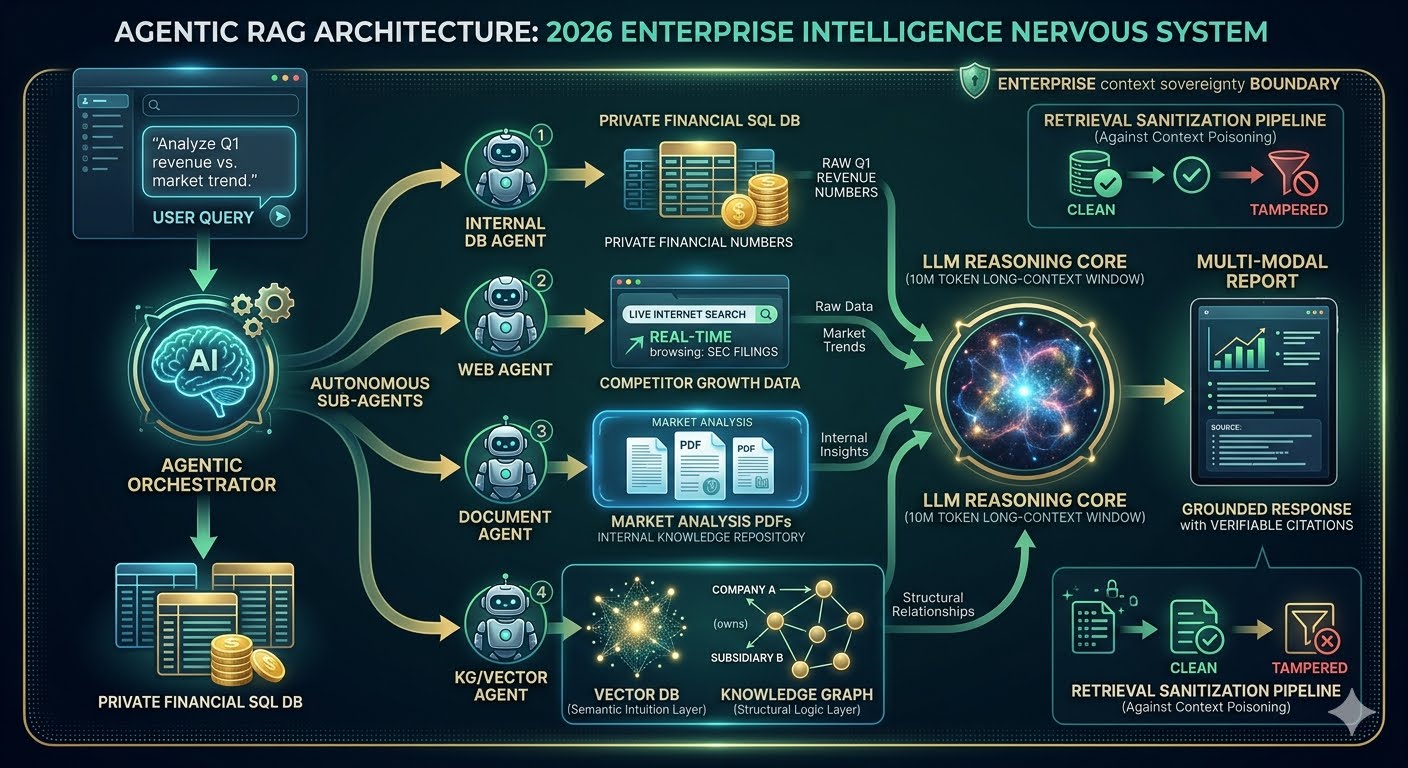
Modern Security Operations Centers (SOCs) are constantly flooded with thousands of security alerts every hour. Human analysts cannot review this volume manually. Python serves as the underlying language for Security Orchestration, Automation, and Response (SOAR) pipelines.
When a Security Information and Event Management (SIEM) platform flags an anomalous IP address, a background Python script triggers automatically.
The script queries threat intelligence APIs, cross-references internal databases, adds a temporary block rule to the firewall, and isolates the compromised endpoint on the network.
3. Malware Analysis and Digital Forensics
When a system is compromised, digital forensics investigators use Python to parse memory images and track attacker behavior. Frameworks like Volatility (written in Python) allow analysts to carve through raw RAM dumps to extract active network sockets, injected DLL files, and hidden processes run by malware strains.
Part II: Python as the Engine of Artificial Intelligence
Artificial Intelligence has transitioned away from hardcoded expert systems into data-driven machine learning models. Python provides the necessary infrastructure to manage this entire data life cycle.
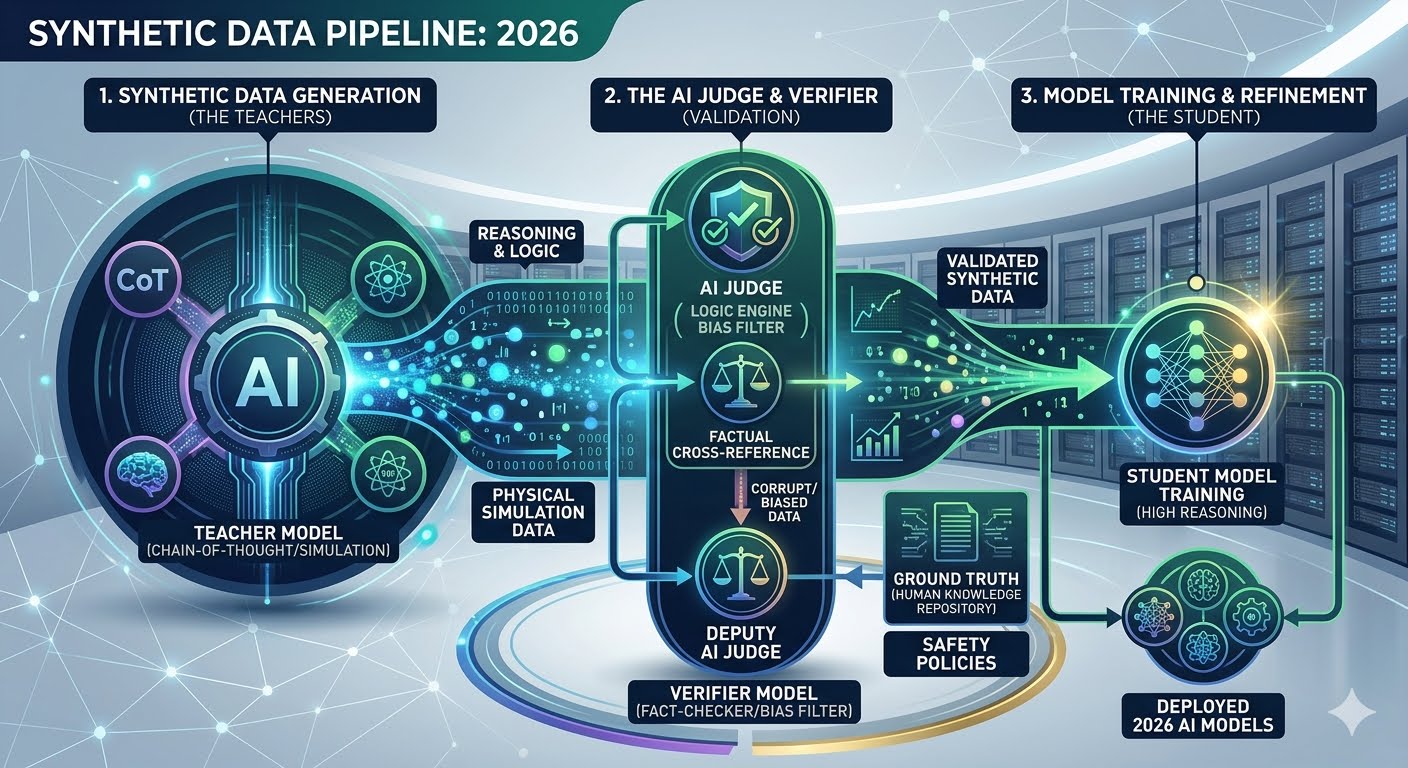
[Raw Big Data] ──► [Pandas Data Processing] ──► [PyTorch/TensorFlow Training] ──► [AI Inference Model]
1. Data Collection and Processing
An AI model is only as good as the data used to train it. Python libraries like Pandas and NumPy enable data scientists to clean, manipulate, and restructure millions of rows of data. It handles missing attributes, eliminates anomalous feature errors, and normalizes values so they are ready for model ingestion.
2. Training Deep Neural Networks
The modern renaissance in Generative AI, Large Language Models (LLMs), and computer vision is powered by deep learning frameworks built explicitly for Python.
PyTorch (Meta): Popular in academic research and cutting-edge corporate labs for its dynamic computation graphs, making it highly customizable.
TensorFlow (Google): Designed with production scaling in mind, optimizing models to run efficiently across clusters of thousands of enterprise Graphics Processing Units (GPUs).
3. Natural Language Processing (NLP)
Technologies like ChatGPT rely on NLP to understand and respond to human language. Using Python's Transformers library, an engineer can download a pre-trained model, fine-tune it on proprietary documentation, and deploy a responsive enterprise agent in an afternoon.
Part III: The Convergence (AI-Driven Autonomous Cyber Defense)
The true shift occurs where cybersecurity and artificial intelligence merge. As attackers adopt automated tools, traditional static security strategies (like hardcoded firewall rules or signature-based antivirus files) are no longer sufficient. Modern cyber defense requires dynamic, Python-orchestrated AI engines to match this speed.
┌───┐
│ THE CYBER-AI THREAT MATRIX │
├──┬─┤
│ DEFENSIVE MACHINE │ OFFENSIVE AI MALWARE │
├─┼─┤
│ • Behavioral Anomalies │ • Adaptive Phishing Emails │
│ • Deep-Packet Inspection │ • Dynamic Signature Shifts │
│ • Predictive Threat Hunting│ • Automated Exploit Logic │
└─┴─┘
1. AI Anomaly Detection in Network Traffic
Instead of relying on a list of banned IP addresses, security systems train unsupervised machine learning models (such as Isolation Forests or Autoencoders) directly on regular corporate network logs.
Using Python, these models establish a baseline of "normal user behavior." If an account suddenly downloads 500 encrypted files at 3:00 AM from an atypical geographical location, the AI model flags the behavioral anomaly instantly, stopping potential ransomware propagation in its tracks.
2. Combating AI-Generated Social Engineering
Attackers are now using Large Language Models to generate highly convincing, personalized spear-phishing emails at scale. To counter this, defensive engineering groups use Python to build NLP classification models that inspect incoming email semantics. These models can flag the subtle linguistic styles characteristic of AI-generated text, blocking malicious emails before they land in an employee's inbox.
Conclusion: The Critical Skill for Next-Generation Engineers
Python is no longer just an optional programming asset; it is the fundamental bridge connecting infrastructure security with data science. Its readability simplifies the engineering process, while its deep ecosystem provides the computational power required to process massive datasets and defend networks in real time.
As autonomous malware and smart defense grids become more common, the developers and security analysts who master Python will be the ones who build—and secure—the digital infrastructure of tomorrow.
Did you find this ICT insight helpful?