The Latest in

ICT Articles & Tutorials

World ICT News is a professional platform dedicated to Artificial Intelligence, Cloud Computing, DevOps, and Cybersecurity. Empowering the next generation of ICT specialists. Our exclusive tutorials and articles are designed to serve as a stepping stone for you into the world of ICT industry...

The Zero Trust Architecture (ZTA)
May 10, 2026
5 min read

The Zero Trust Architecture (ZTA)

Zero Trust Architecture in cybersecurity. The Zero Trust Architecture (ZTA) is no longer just a buzzword in cybersecurity circles; it is the fundamental framework required to secure the modern, decentralized digital landscape. As organizations move away from traditional office-based environments toward cloud-integrated, remote-first structures, the old "castle-and-moat" security model has become obsolete. Zero Trust represents a paradigm shift from "trust but verify" to "never trust, always verify."The Death of the PerimeterFor decades, cybersecurity was built on the concept of a hardened perimeter. If a user was inside the network (the castle), they were trusted. If they were outside, they were untrusted. This worked when all data lived in on-premise servers and all employees sat at desks in a single building.However, the rise of Cloud Computing, Software-as-a-Service (SaaS), and Bring Your Own Device (BYOD) policies shattered this perimeter. Today, an employee might access sensitive financial data from a coffee shop using a personal tablet. In this environment, the "internal" network is no longer a safe zone. If an attacker breaches the perimeter—through a stolen password or a phishing link—they gain "lateral movement" capabilities, allowing them to roam freely through the network. Zero Trust was designed to solve this exact vulnerability.The Core Principles of Zero TrustZero Trust is not a single software or product; it is a strategic framework based on three unwavering pillars:Assume Breach: Operates under the constant assumption that the network has already been compromised. This mindset forces security teams to design defenses that limit the "blast radius" of an attack.Verify Explicitly: Every request for access—whether from a CEO inside the office or an automated bot—must be authenticated and authorized based on multiple data points. This includes user identity, location, device health, service or workload, and data classification.Least Privilege Access: Users are granted only the minimum level of access required to perform their specific task, and only for the duration needed. This prevents a compromised account from accessing the entire database.How Zero Trust Works: The ComponentsTo implement Zero Trust, organizations rely on several key technological components working in harmony:Identity and Access Management (IAM)Identity is the new perimeter. Strong IAM involves Multi-Factor Authentication (MFA), which goes beyond simple passwords to include biometrics or hardware tokens. In a Zero Trust environment, identity is continuously re-validated throughout a session, not just at login.Micro-segmentationTraditional networks are "flat," meaning once you’re in, you can see everything. Micro-segmentation breaks the network into small, isolated zones. A person in the Marketing department has no technical path to reach the Accounting servers. If a Marketing laptop is infected with ransomware, the walls of the micro-segment stay up, preventing the virus from spreading to the rest of the company.Device Health VerificationBefore granting access, the system checks the "health" of the device. Does it have the latest security patches? Is the antivirus running? Is it a recognized corporate device? If a device is deemed "unhealthy," access is denied regardless of how valid the user's password is.Zero Trust Network Access (ZTNA)ZTNA replaces the traditional VPN. While a VPN gives a user a "tunnel" into the whole network, ZTNA creates a 1-to-1 connection between the user and a specific application. The rest of the network remains invisible to the user.The Benefits of a Zero Trust ApproachThe primary advantage of ZTNA is a massive reduction in risk. By eliminating implicit trust, companies can stop data breaches that rely on stolen credentials or lateral movement.Furthermore, it provides unprecedented visibility. Because every request is verified, security teams have a detailed log of who is doing what, when, and from where. This data is invaluable for compliance (like GDPR or HIPAA) and for spotting "Shadow IT"—unauthorized apps being used by employees.Finally, it supports workforce agility. Zero Trust allows employees to work securely from anywhere in the world without the performance bottlenecks often caused by traditional VPNs.Challenges in ImplementationTransitioning to Zero Trust is a marathon, not a sprint. The biggest hurdle is often legacy infrastructure. Older systems may not support modern authentication protocols like SAML or OIDC, making them difficult to "wrap" in a Zero Trust layer.There is also the risk of User Friction. If security checks are too frequent or cumbersome, employee productivity drops. Organizations must balance security with "Seamless Authentication"—using signals like location and behavior to verify identity in the background without constantly prompting the user for a code.The Future: AI and Continuous MonitoringAs we look forward, Zero Trust will be increasingly powered by Artificial Intelligence (AI) and Machine Learning (ML). Static rules (e.g., "Allow access if the user is in London") are being replaced by dynamic, risk-based scoring.If an AI detects that a user is logging in from London at 9:00 AM, but then attempts to download 50GB of data from a server in Tokyo at 9:05 AM, the system can instantly flag this as "impossible travel" and revoke access automatically. This level of real-time, automated response is the ultimate goal of the Zero Trust journey.ConclusionIn a world where cyberattacks are no longer a matter of "if" but "when," Zero Trust Architecture is the only logical response. By removing the concept of "trust" from the technical infrastructure, organizations can build a resilient environment that protects data even when the perimeter is breached. It requires a fundamental change in culture and technology, but for any business operating in the 21st century, it is a non-negotiable requirement for survival.
Intrusion Detection System (IDS)
May 08, 2026
7 min read

Intrusion Detection System (IDS)

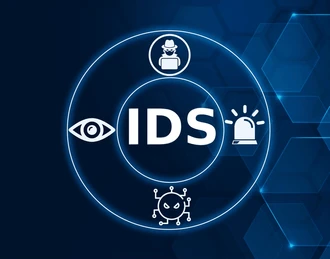
Intrusion Detection System (IDS) in Cybersecurity. A network security tool that can monitor network traffic and devices for specified malicious and, suspicious activities or security policy violations is considered an intrusion detection system (IDS).An IDS can help accelerate and automate network threat detection by alerting security administrators to known or potential threats, or by sending alerts to a centralized security tool. A centralized security tool such as a security information and event management (SIEM) system can combine data from other sources to help security teams identify and respond to cyberthreats that might slip by other security measures.IDSs can also support compliance efforts. Certain regulations, such as the Payment Card Industry Data Security Standard (PCI-DSS), require organizations to implement intrusion detection measures.An IDS cannot stop security threats on its own. Today IDS capabilities are typically integrated with, or incorporated into, intrusion prevention systems (IPSs), which can detect security threats and automatically act to prevent them.How intrusion detection systems workIDSs can be software applications that are installed on endpoints or dedicated hardware devices that are connected to the network. Some IDS solutions are available as cloud services. Whatever form it takes, an IDS uses one or both of two primary threat detection methods: signature-based or anomaly-based detection.Signature-based detectionSignature-based detection analyzes network packets for attack signatures, unique characteristics or behaviors that are associated with a specific threat. A sequence of code that appears in a particular malware variant is an example of an attack signature.A signature-based IDS maintains a database of attack signatures against which it compares network packets. If a packet triggers a match to one of the signatures, the IDS flags it. To be effective, signature databases must be regularly updated with new threat intelligence as new cyberattacks emerge and existing attacks evolve. Brand new attacks that are not yet analyzed for signatures can evade signature-based IDS.Anomaly-based detectionAnomaly-based detection methods use machine learning to create, and continually refine, a baseline model of normal network activity. Then it compares network activity to the model and flags deviations, such as a process that uses more bandwidth than normal, or a device opening a port.Because it reports any abnormal behavior, anomaly-based IDS can often catch new cyberattacks that might evade signature-based detection. For example, anomaly-based IDSs can catch zero-day exploits, attacks that take advantage of software vulnerabilities before the software developer knows about them or has time to patch them.But anomaly-based IDSs may also be more prone to false positives. Even benign activity, such as an authorized user accessing a sensitive network resource for the first time, can trigger an anomaly-based IDS.Less common detection methodsReputation-based detection blocks traffic from IP addresses and domains associated with malicious or suspicious activity. Stateful protocol analysis focuses on protocol behavior, for example, it might identify a denial-of-service (DoS) attack by detecting a single IP address making many simultaneous TCP connection requests in a short period.Whatever method(s) it uses, when an IDS detects a potential threat or policy violation, it alerts the incident response team to investigate. IDSs also keep records of security incidents, either in their own logs or by logging them with a security information and event management (SIEM) tool (see 'IDS and other security solutions' below). These incident logs can be used to refine the IDS’s criteria, such as by adding new attack signatures or updating the network behavior model.Types of intrusion prevention systemsIDSs are categorized based on where they’re placed in a system and what kind of activity they monitor.Network intrusion detection systems (NIDSs): monitor inbound and outbound traffic to devices across the network. NIDS are placed at strategic points in the network, often immediately behind firewalls at the network perimeter so that they can flag any malicious traffic breaking through.NIDS may also be placed inside the network to catch insider threats or hackers who hijacked user accounts. For example, NIDS might be placed behind each internal firewall in a segmented network to monitor traffic flowing between subnets.To avoid impeding the flow of legitimate traffic, a NIDS is often placed “out-of-band,” meaning that traffic doesn’t pass directly through it. A NIDS analyzes copies of network packets rather than the packets themselves. That way, legitimate traffic doesn’t have to wait for analysis, but the NIDS can still catch and flag malicious traffic.Host intrusion detection systems (HIDSs): are installed on a specific endpoint, like a laptop, router, or server. The HIDS only monitors activity on that device, including traffic to and from it. A HIDS typically works by taking periodic snapshots of critical operating system files and comparing these snapshots over time. If the HIDS notices a change, such as log files being edited or configurations being altered, it alerts the security team.Security teams often combine network-based intrusion detection systems and host-based intrusion detection systems. The NIDS looks at traffic overall, while the HIDS can add extra protection around high-value assets. A HIDS can also help catch malicious activity from a compromised network node, like ransomware spreading from an infected device.While NIDS and HIDS are the most common, security teams can use other IDSs for specialized purposes. A protocol-based IDS (PIDS) monitors connection protocols between servers and devices. PIDS are often placed on web servers to monitor HTTP or HTTPS connections.An application protocol-based IDS (APIDS): works at the application layer, monitoring application-specific protocols. An APIDS is often deployed between a web server and an SQL database to detect SQL injections.IDS evasion tacticsWhile IDS solutions can detect many threats, hackers can get around them. IDS vendors respond by updating their solutions to account for these tactics. However, these solution updates create something of an arm’s race, with hackers and IDSs trying to stay one step ahead of one another.Some common IDS evasion tactics include:Distributed denial-of-service (DDoS) attacks: taking IDSs offline by flooding them with obviously malicious traffic from multiple sources. When the IDS’s resources are overwhelmed by the decoy threats, the hackers sneak in.Spoofing: faking IP addresses and DNS records to make it look like their traffic is coming from a trustworthy source.Fragmentation: splitting malware or other malicious payloads into small packets, obscuring the signature and avoiding detection. By strategically delaying packets or sending them out of order, hackers can prevent the IDS from reassembling them and noticing the attack.Encryption: using encrypted protocols to bypass an IDS if the IDS doesn’t have the corresponding decryption key.Operator fatigue: generating large numbers of IDS alerts on purpose to distract the incident response team from their real activity.IDS and other security solutionsIDSs aren’t standalone tools. They’re designed to be part of a holistic cybersecurity system, and are often tightly integrated with one or more of the following security solutions.IDS and SIEM (security information and event management)IDSs alerts are often funneled to an organization’s SIEM, where they can be combined with alerts and information from other security tools into a single, centralized dashboard. Integrating IDS with SIEMs enables security teams to enrich IDS alerts with threat intelligence and data from other tools, filter out false alarms‌, and prioritize incidents for remediation.IDS and IPS (intrusion prevention systems)As noted above, an IPS monitors network traffic for suspicious activity, like an IDS, and intercepts threats in real time by automatically terminating connections or triggering other security tools. Because IPSs are meant to stop cyberattacks, they’re usually placed inline, meaning that all traffic has to pass through the IPS before it can reach the rest of the network.Some organizations implement an IDS and an IPS as separate solutions. More often, IDS and IPS are combined in a single intrusion detection and prevention system (IDPS) which detects intrusions, logs them, alerts security teams and automatically responds.IDS and firewallsIDSs and firewalls are complementary. Firewalls face outside the network and act as barriers by using predefined rulesets to allow or disallow traffic. IDSs often sit near firewalls and help catch anything that slips past them. Some firewalls, especially next-generation firewalls, have built-in IDS and IPS functions.
Brute Force Attack in Cybersecurity
May 07, 2026
9 min read

Brute Force Attack in Cybersecurity

Brute force attack in Cybersecurity. A cyberattack whereby hackers try to gain unauthorized access to a user account or encrypted data through trial and error, attempting several login credentials or encryption keys until they find the correct password is referred to as brute force attack. Brute force attacks often target authentication systems such as website login pages, secure shell (SSH) servers or password-protected files.Unlike other cyberattacks, which exploit software vulnerabilities, brute force attacks leverage computing power and automation to guess passwords or keys. Basic brute force attempts use automated scripts or bots to test thousands of password combinations per minute—much like a thief trying every possible combination on a padlock until it opens.Weak or simple passwords make the job easier, while strong ones can render this type of attack extremely time-consuming or impractical. However, more advanced brute force techniques are constantly being developed.To illustrate the speed and scale of today's escalating cyber threats, consider that Microsoft blocks an average of 4,000 identity attacks per second. Yet attackers continue to push boundaries. Specialized password cracking rigs can achieve roughly 7.25 trillion password attempts in that same second.And now, with the emergence of quantum computing and the need for post-quantum cryptography, brute force attacks are no longer limited by today’s hardware. Modern cryptographic methods for authentication, such as RSA encryption, rely on the computational difficulty of factoring large numbers into prime numbers.Why are brute force attacks so dangerous?Brute force attacks are a serious cybersecurity threat because they target the weakest link in security defenses: human-chosen passwords and poorly protected accounts.A successful brute force attack can lead to immediate unauthorized access, allowing attackers to impersonate the user, steal sensitive data or further infiltrate a network. Additionally, unlike more complex hacks, brute force attacks require relatively little technical skill, just persistence and resources.One of the major risks of a brute force attack is that a single compromised account can have a cascading effect. For example, if cybercriminals brute force an administrator’s credentials, they can use them to compromise other user accounts.Even a normal user account, once accessed, might reveal personally identifiable information or serve as a stepping stone to more privileged access. Many data breaches and ransomware incidents begin with attackers using brute force to crack remote access accounts—such as Remote Desktop Protocol (RDP) or VPN logins. Once inside, attackers may deploy malware, ransomware or simply lock down the system.Brute force attacks are also a network security concern as the volume of assault attempts can be noisy. Significant network noise can overwhelm authentication systems or act as a smokescreen for more silent cyberattacks.Recently, researchers observed a global brute force campaign leveraging almost 3 million unique IP addresses to target VPNs and firewalls, highlighting just how massive and distributed these attacks can become.Typically, a flood of failed user password attempts would tip off defenders, but attackers have ways to mask their activity. By using bots or botnets—a network of compromised computers—attackers can distribute attempts across various sources, such as social media accounts. This makes malicious login attempts blend in with normal user behavior.In addition to their own severity, it’s important to note that brute force attacks often go hand-in-hand with other tactics. For instance, an attacker might use phishing to obtain one account’s credentials and brute force for another. Or they might use the results of a brute force attack (stolen passwords) to conduct phishing scams or fraud elsewhere.How do brute force attacks work?To understand how brute force attacks work, consider the sheer number of possible passwords an attacker may need to test. Brute force attacks operate by generating and checking credentials at high speed. The attacker might start with obvious guesses (like “password” or “123456”) and then progress to systematically generating all possible combinations of characters until they discover the correct password.Modern attackers harness significant computing power—from multi-core computer processing units (CPUs) to cloud computing clusters—to accelerate this process.For example, a six-character password using only lowercase letters has 26^6 possible passwords. That’s roughly 308 million combinations. With today’s hardware, that number of guesses can be made almost instantly, meaning a six-letter weak password could be cracked immediately.In contrast, a longer password with mixed cases, numbers and special characters yields exponentially more possibilities, greatly increasing the amount of time and effort required to guess it correctly.Passwords aren't the only thing at risk: brute force methods can also decrypt files or discover encryption keys by exhaustively searching the full spectrum of possible keys (also known as the "key space"). The feasibility of such attacks depends on the key length and algorithm strength. For instance, a 128-bit encryption key has an astronomically large number of possibilities, making brute forcing it virtually impossible with current technology.In practice, brute force attacks often succeed not by cracking unbreakable ciphers, but by exploiting human factors: guessing common passwords, assuming password reuse or targeting systems with no lockout mechanism.Online vs. offline attacksBrute force techniques can be applied in two contexts: online attacks (real-time attempts against live systems) and offline attacks (using stolen data, such as hashed passwords—short, fixed codes generated from passwords that are nearly impossible to reverse).Online attacksIn online attacks, the hacker interacts with a target system—such as a web application login or SSH service—and tries passwords in real-time. Attack speed is limited by network delays and defense mechanisms.For example, rate limiting restricts the number of attempts in a given time, and CAPTCHAs are authentication methods that distinguish humans from bots. Attackers often distribute their online attempts across multiple IP addresses or use a botnet to avoid triggering IP-based blocks.Offline attacksIn offline attacks, the attacker already obtained the encrypted data or password hashes (for instance, from a data breach) and can use their own machines to attempt millions or billions of guesses per second without alerting the target. Specialized password cracking tools—usually open source—exist to facilitate these brute force strategies.For example, John the Ripper, Hashcat and Aircrack-ng are popular tools that automate brute force password cracking. These tools use algorithms to manage the onslaught of guesses and graphics processing units (GPUs) to hash and compare passwords at incredible speeds.Types of brute force attacksBrute force attacks come in several forms, each using different strategies to guess or reuse credentials to gain unauthorized access.Simple brute force attacksThis approach tries all possible passwords by incrementally cycling through every combination of allowed characters. A simple brute force attack (also called exhaustive search) does not use any prior knowledge about the password; it will systematically attempt passwords like “aaaa…,” “aaab…,” and so on through “zzzz…,” including digits or symbols depending on the character set.Given enough time, a simple brute force attack will eventually find the correct credentials through pure trial and error. However, it can be extremely time-consuming if the password is long or complex.Dictionary attacksRather than blindly iterating through every possible password combination, a dictionary attack tries a curated list of likely passwords (a "dictionary" of terms) to expedite the guessing.Attackers compile lists of common words, phrases and passwords like Admin, Emmanuel or Mypassword123. Because many users choose weak passwords that are simple or based on words typically found in a dictionary, this method can yield quick wins.Hybrid brute force attacksA hybrid attack combines the dictionary attack approach with simple brute force methods. Attackers start with a list of likely base words and then apply brute force modifications around them. For example, the word “spring” might be tried as “Spring2025!” by adding capital letters, numbers or symbols to satisfy complexity requirements.Credential stuffing attacksCredential stuffing is a specialized variant of brute force attacks where the attacker uses login credentials (username and password pairs) stolen from one breach and tries them on other websites and services. Rather than guessing new passwords, the attacker stuffs known passwords into multiple login forms, betting on the fact that many people use the same credentials across different accounts.Rainbow table attacksA rainbow table attack is an offline password cracking technique that trades computing time for memory by using precomputed tables of hashes. Instead of hashing guessed passwords on the fly, attackers use a “rainbow table”—a giant lookup table of hash values for many possible passwords—to quickly match a hash to its original password.Reverse brute force attacksIn a reverse brute force attack, the hacker turns the usual attack method on its head. Instead of trying many passwords against one user, they try one password (or a small set) against many different user accounts.Password sprayingPassword spraying is a stealthier version of the reverse brute force technique. Attackers use a small list of common passwords (such as “Summer2025!”) across several accounts. This allows them to target multiple users without triggering lockout protections on any single account.How to protect against brute force attacksOrganizations can implement multiple security measures to protect against brute force attempts. Key practices include:Implement strong password policiesRequire longer passwords (at least 12–15 characters) and a mix of character types (uppercase, lowercase, numbers and special characters) to ensure complex passwords. Encourage passphrases and promote password managers to help users generate and store secure credentials.Enable multi-factor authentication (MFA)Add an extra authentication factor. Multi-factor authentication (such as one-time codes or authentication apps) helps ensure a password alone is not enough for access.Enforce account lockout and CAPTCHAImplement lockout policies so that accounts are temporarily locked after several failed login attempts. CAPTCHA can distinguish bots from real users, slowing down brute force campaigns.Monitor and block suspicious activityDeploy real-time monitoring and anomaly detection. Flag excessive failed attempts or logins from unusual IP addresses. Additionally, use automated systems to ban suspicious sources.Secure password storage and protocolsUse strong, salted hashes—which combine hashes with random data—for stored passwords (such as bcrypt or Argon2id). Enforce secure authentication protocols like two-factor authentication, require VPNs for sensitive access points like SSH or RDP, and disable default credentials.Each additional barrier—whether a lockout rule or encryption—can help deter brute force infiltration. By adopting a layered approach that addresses both human and technical factors, organizations can better protect against brute force attacks.
Cybersecurity High Demand Specialization Areas in 2026
May 06, 2026
3 min read

Cybersecurity High Demand Specialization Areas in 2026

In 2026, the cybersecurity landscape is characterized by a shift from generalist IT roles toward highly specialized disciplines, driven by the massive scale of AI-powered attacks, multi-cloud adoption, and complex global privacy regulationsTop Cybersecurity Specializations in 2026The following specializations are currently in highest demand due to evolving technological challenges:AI and Machine Learning Security: This is the fastest-growing area in 2026. Specialists focus on protecting AI models from adversarial attacks (e.g., data poisoning), securing machine learning pipelines, and using AI for automated threat detection and responseCloud Security Architecture: With over 95% of enterprise workloads now cloud-native, this role focuses on multi-cloud posture management, securing serverless architectures, and managing “Cloud Sovereignty” to keep data within specific legal jurisdictionsZero Trust & Identity Security: Identity is the “new perimeter.” Specializing here involves implementing continuous authentication, identity-first access models, and behavioral analytics to ensure “never trust, always verify” across hybrid workforcesGovernance, Risk, and Compliance (GRC): Demand is high for professionals who can navigate new global regulations (like the EU AI Act) and translate technical risks into business and financial impact for executive boardsApplication Security (AppSec) & DevSecOps: This role embeds security directly into the software development lifecycle. It prioritizes securing the software supply chain (e.g., third-party libraries and APIs) using automated testing within CI/CD pipelinesOperational Technology (OT) & IoT Security: Protecting critical infrastructure like power grids, manufacturing plants, and smart cities. These environments require specialized knowledge beyond traditional IT to secure industrial control systems (ICS)Digital Forensics & Incident Response (DFIR): Experts analyze the aftermath of breaches to rebuild attack timelines and collect evidence. This field is essential for organizations to explain incidents to regulators and leadershipKey 2026 Trends Driving Demand:AI-Augmented Defense: Defenders must move beyond manual monitoring to AI-driven automated responses to match threat speeds.Specialization over Generalization: Organizations are prioritizing specialists who can deliver immediate, high-value technical security over general IT security roles.Critical Infrastructure Focus: Increased threats to national infrastructure drive demand for ICS/OT security professionals.Key Career Metrics (2026 Estimates)Specialized roles consistently command higher salaries than generalist positions.Specialization Key Roles Estimated Salary Range (US)Cloud Security Cloud Architect, Cloud Security Engineer $130,000 — $185,000+Offensive Security Lead Penetration Tester, Red Team Lead $115,000 — $160,000+AI Security AI Security Engineer, ML Threat Analyst, Highly competitive; top-tier premiumGovernance (GRC) Compliance Manager, Risk Strategist $128,000 — $171,200Architecture Security Architect $130,000 — $190,000Recommended Pathway for 2026Foundations: Master networking (TCP/IP), Linux, and Python for automationCore Certification: Start with CompTIA Security+ or Google Cybersecurity Certificate to learn foundational principles, PECB Certifications for Management and Auditing positions.Specialization: Pursue advanced credentials like CISSP for leadership, CEH for offensive roles, or CCSP for cloudPortfolio: Build a “proof of skills” with home labs, CTF (Capture the Flag) solutions, and security scripts hosted on GitHubTop Certifications to Watch in 2026:AI & Governance: Certified AI Project Manager (CAIPM), Certified Responsible AI Governance and Ethics (CRAGE).Network & Defense: Certified Network Defender (CND), Certified Ethical Hacker (CEH).Management: Certified Chief Information Security Officer (CCISO), CISSP.
Cybersecurity Skills and Jobs in 2026
May 04, 2026
3 min read

Cybersecurity Skills and Jobs in 2026

Cybersecurity Skills and Jobs in 2026. The cybersecurity job market in 2026 is defined by a massive global talent gap—estimated at 4.8 million unfilled roles—and a shift toward hyper-specialization in AI defense and cloud-native security. As automation and AI-driven threats evolve, roles are moving away from manual log-monitoring toward strategic risk management and human-in-the-loop oversight.Top Cybersecurity Jobs in 2026The most in-demand roles in 2026 are increasingly specialized, reflecting the complexity of modern digital infrastructure.AI Security Specialist: Protects AI models and machine learning pipelines from adversarial attacks like data poisoning and model theft.Cloud Security Engineer: Secured multi-cloud and hybrid environments; one of the most critical roles as 95% of enterprise workloads are now cloud-native.Zero-Trust Architect: Designs security frameworks based on "never trust, always verify" principles across identity and network layers.Incident Response Manager: Leads rapid containment and recovery during breaches, focusing on speed and cross-functional coordination.OT & IoT Security Expert: Protects critical infrastructure, smart grids, and industrial control systems (ICS) from emerging physical-digital threats.GRC (Governance, Risk, and Compliance) Manager: Aligns technical controls with tightening global regulations like the EU AI Act.Essential Technical Skills for 2026To stay competitive, professionals must master both foundational and emerging technical competencies.AI & Machine Learning Proficiency: Validating and tuning AI-driven detection engines to reduce false positives.Cloud Infrastructure Mastery: Deep knowledge of AWS, Azure, or GCP, specifically in IAM, container security, and API protection.Automation & Scripting: Using Python, PowerShell, or Bash to automate repetitive tasks and security orchestration.Zero Trust & Identity Security: Expertise in Multi-Factor Authentication (MFA), Privileged Access Management (PAM), and continuous verification.Threat Detection & Hunting: Proficiency with SIEM (Splunk, QRadar) and EDR tools to correlate signals across endpoints and cloud workloads.The Role of Soft SkillsAutomation handles repetitive tasks, but human judgment is now the primary differentiator for high-level roles.Communication: Translating complex technical risks into business impact for executive leadership.Critical Thinking: Making high-stakes decisions under extreme pressure during active incidents.Continuous Learning: Maintaining an adaptable mindset to keep pace with "autonomous malware" and quantum computing threats.2026 Salary Outlook (U.S. Typical Ranges)Strong demand has pushed compensation higher, particularly for specialists.EC-Council UniversityCareer StageTypical Salary RangeEntry-Level~$74,000 – $110,000Mid-Level~$115,000 – $212,000Senior/Specialist~$154,000 – $280,000+CISO/Executive~$220,000 – $420,000+How to PrepareBuild a Portfolio: Document hands-on lab work, penetration testing reports, and custom security scripts on GitHub or LinkedIn.Earn Specialized Certifications: Employers favor targeted credentials like CEH (Ethical Hacking), CHFI (Digital Forensics), or CCSP (Cloud Security).Hands-on Practice: Use platforms like CyberQ or iLabs for high-fidelity simulations
Cyber Threat Analysis
May 02, 2026
3 min read

Cyber Threat Analysis

Cyber Threat Analysis.Cyber threat analysis is the proactive process of identifying, assessing, and understanding potential security threats to an organisation's digital systems. It transforms raw security data into actionable intelligence, allowing security teams to anticipate attacks rather than just reacting to them.Core ComponentsA robust analysis typically examines four key dimensions of a threat:Threat Actors (Who): Identifying the source, such as nation-states, cybercriminals, or malicious insiders, and understanding their motivations.Techniques & Methods (How): Analysing the specific Tactics, Techniques, and Procedures (TTPs) used to breach systems.Targeted Assets (What): Determining which critical systems, data, or infrastructures are at risk.Potential Impact (So What): Evaluating the likely financial, reputational, or operational damage if the threat materialises.The 4 Tiers of Cyber Threat Intelligence (CTI)Analysis is often categorised into these levels to serve different organisational needs:Strategic: High-level analysis of broad trends and geopolitical risks for executive decision-makers.Operational: Insights into specific ongoing or upcoming campaigns targeting an industry or organization.Tactical: Technical details on adversary behaviors (TTPs) used by SOC analysts to improve detection logic.Technical: Granular data like malicious IP addresses or file hashes (Indicators of Compromise) for immediate blocking.The Threat Intelligence LifecycleSecurity teams use a structured workflow to maintain continuous visibility:Planning & Direction: Defining the scope and specific intelligence goals.Collection: Gathering raw data from internal logs, open-source intelligence (OSINT), and commercial feeds.Processing: Formatting and cleaning data to prepare it for analysis.Analysis: Interpreting the data to find patterns and predict attacker behavior.Dissemination: Delivering findings to stakeholders in usable formats.Feedback: Refining the process based on how effectively the intelligence was used.Common Threat FrameworksAnalysts use standardized models to map and communicate threat behavior:MITRE ATT&CK: A globally accessible knowledge base of adversary tactics and techniques based on real-world observations.STRIDE: A model used in threat modeling to identify threats like Spoofing, Tampering, and Information Disclosure.Cyber Kill Chain: Developed by Lockheed Martin to identify and prevent the stages of a cyberattack.STRIDE Framework and Career Paths1. The STRIDE FrameworkDeveloped by Microsoft, STRIDE is a mnemonic used during the design phase of a system to identify what could go wrong. It categorizes threats based on the security property they violate:CategorySecurity Property ViolatedDefinition & ExampleSpoofingAuthenticityPretending to be someone or something else (e.g., using a stolen admin password).TamperingIntegrityMaliciously modifying data or code (e.g., changing an account balance in a database).RepudiationNon-repudiationClaiming not to have performed an action because of a lack of evidence (e.g., deleting logs to hide a transaction).Information DisclosureConfidentialityExposing private data to unauthorized users (e.g., a data breach of patient records).Denial of ServiceAvailabilityCrashing or slowing down a system so users can't access it (e.g., a DDoS attack).Elevation of PrivilegeAuthorizationGaining higher permissions than allowed (e.g., a standard user gaining root access).
Cybersecurity Risk Management
May 02, 2026
3 min read

Cybersecurity Risk Management

Cybersecurity Risk Management.Cybersecurity risk management is the continuous process of identifying, assessing, and mitigating digital threats to an organization's assets to reduce the likelihood and impact of a cyberattack. It shifts the focus from building an "impenetrable" defense to a strategic, business-aligned approach that prioritizes the most critical vulnerabilities.Core Process (Lifecycle)The risk management lifecycle is iterative, often repeating at least bi-annually or whenever major infrastructure changes occur.Framing (Context): Define the scope (systems, data, and business units to be examined), organizational risk tolerance (appetite for risk), and legal requirements.Identification: Catalog all digital and physical assets (hardware, software, data, and cloud services) and pinpoint potential threats like malware, phishing, or insider errors.Assessment: Evaluate the likelihood of a threat occurring and its potential impact on business operations, reputation, and finances.Response (Treatment): Decide how to handle identified risks:Mitigation: Implement security controls (e.g., multi-factor authentication, firewalls) to reduce risk.Transfer: Shift the risk to a third party, most commonly by purchasing cyber insurance.Acceptance: Consciously decide to live with the risk if the cost of treatment exceeds the potential impact.Avoidance: Discontinue the business activity that creates the risk entirely.Monitoring: Use tools like SIEM systems to continuously track the effectiveness of controls and detect new emerging threats in real time.Key FrameworksStandardized frameworks provide a structured roadmap for building these programs:NIST Cybersecurity Framework (CSF) 2.0: Focuses on six core functions: Govern, Identify, Protect, Detect, Respond, and Recover.ISO/IEC 27001: The international standard for establishing an Information Security Management System (ISMS).CIS Critical Security Controls: A prioritized list of 18 actionable best practices to stop the most common cyber threats.Why It MattersFinancial Protection: Data breaches cost an average of $4.45 million per incident.Regulatory Compliance: Helps meet strict mandates like GDPR, HIPAA, or PCI DSS to avoid heavy fines.Business Continuity: Ensures critical systems remain operational and can recover quickly from an attack.Reputation: Proactive management builds trust with customers and partners who expect their data to be handled securelyCybersecurity Risk Matrix TemplateA risk matrix (or heat map) is used to prioritize security efforts by calculating the Risk Level (Likelihood × Impact).Likelihood ↓ / Impact →1. Negligible2. Moderate3. Significant4. Catastrophic4. Almost CertainMediumHighVery HighVery High3. LikelyLowMediumHighVery High2. UnlikelyLowLowMediumHigh1. RareLowLowLowMediumExample Risk Register EntryRisk ScenarioCauseLikelihoodImpactRisk LevelMitigation PlanData BreachUnsecured cloud storageLikely (3)Catastrophic (4)Very HighImplement mandatory AES-256 encryptionPhishingEmployee errorAlmost Certain (4)Moderate (2)HighMonthly awareness training & MFAThird-Party Vendor Risk Assessment ChecklistBefore onboarding any vendor with access to your systems or data, use this checklist to perform due diligence.1. Vendor ClassificationTiering: Is the vendor Critical, High, Medium, or Low risk based on data access?Service Scope: What specific systems or data will they handle?2. Security Controls & GovernanceCertifications: Does the vendor provide a SOC 2 Type II report or ISO 27001 certification?Access Control: Do they enforce Multi-Factor Authentication (MFA) and Role-Based Access Control (RBAC)?Data Security: Is data encrypted at rest and in transit (e.g., TLS, AES-256)?Patching: Does the vendor have a formal process for patching critical vulnerabilities within 30 days?3. Resilience & Incident ResponseIncident Response: Do they have a documented incident response plan with a guaranteed breach notification timeframe (e.g., 24-48 hours)?Disaster Recovery (DR): Can they provide results from their last tested DR drill?4. Legal & ComplianceData Processing Agreement (DPA): Is there a signed GDPR-compliant DPA on file?Right to Audit: Does the contract allow your organization to perform security audits or penetration tests?
Application Security and Modern Software
Apr 29, 2026
10 min read

Application Security and Modern Software

Application Security (AppSec) and Modern Software. Application security refers to the process of identifying and repairing vulnerabilities in application software—from development to deployment—to prevent unauthorized access, modification, or misuse.Application security (AppSec) is an integral part of software engineering and application management. It addresses not only minor bugs but also prevents serious application vulnerabilities from being exploited. An ongoing process rather than a single technology, application security (AppSec) is a crucial component of cybersecurity, encompassing practices that prevent unauthorized access, data breaches and code manipulation of application software. As applications have become more complex, AppSec has become increasingly important and challenging. This evolution necessitates new approaches in secure software development. DevOps and security practices must take place in tandem, supported by professionals with a deep understanding of the software development lifecycle (SDLC).At its core, application security aims to safeguard sensitive data and application code from theft or manipulation. This involves implementing security measures during application development and design phases and maintaining protection during and post-deployment.Ranging from hardware safeguards like routers to software-based defenses such as application firewalls, these measures are supplemented by procedures including regular security testing routines. Additional methods, like thorough code reviews and analysis tools, identify and mitigate vulnerabilities within the codebase. Defensive measures such as strong authentication mechanisms and encryption techniques protect against unauthorized access and cyberattacks. Regular security assessments and penetration testing further ensure proactive vulnerability management.Organizations use various strategies for managing application security depending on their needs. Factors such as cost, expertise, and the specific challenges posed by different environments (e.g., cloud security, mobile app security, and web application security for apps accessed through a browser interface) influence their methods. Some organizations choose to manage application security internally, which enables direct control over processes and tailored security measures by in-house teams.When not managed on-premises, organizations outsource application security—a part of managed security services (MSS)—to a managed security service provider (MSSP). An MSSP can provide a sophisticated security operations center (SOC), security information and event management (SIEM) solutions and access to specialized skills and application security tools. These can benefit organizations that lack internal resources and expertise. Whether managed internally or outsourced, strong security measures are essential to safeguard applications against evolving cyber threats and vulnerabilitiesWhy is application security important?Application security is important for any organization handling customer data, as data breaches pose significant risks. Implementing a strong application security program is crucial to mitigating these application security risks and reducing the attack surface. Developers strive to minimize software vulnerabilities to deter attackers targeting valuable data—whether it's customer information, proprietary secrets or confidential employee data—for nefarious purposes.In today's cloud-based landscape, data spans various networks and connects to remote servers. Network monitoring and security is vital, but safeguarding individual applications is equally important. Hackers increasingly target applications, making application security testing and proactive measures indispensable for protection. A proactive approach to application security offers an edge by enabling organizations to address vulnerabilities before they impact operations or customers.Neglecting application security can have serious consequences. Security breaches are prevalent and can lead to temporary or permanent business shutdowns. Customers entrust organizations with their sensitive information, expecting it to be kept safe and private. Failure to secure applications can result in identity theft, financial loss, and other privacy violations. These failures undermine customer trust and damage the organization’s reputation. Investing in the right application security solutions is essential to protect both organizations and their customers from potential harm.Types of application securityApplication security encompasses various features aimed at protecting applications from potential threats and vulnerabilities. These include:Authentication: Implemented by developers to verify the identity of users accessing the application. Authentication ensures that only authorized individuals gain entry, sometimes requiring multifactor authentication, a combination of factors like passwords, biometrics or physical tokens.Authorization: Following authentication, users are granted permission to access specific functionalities based on their validated identity (identity access management). Authorization verifies user privileges against a predefined list of authorized users, ensuring access control.Encryption: Applied to safeguard sensitive data during transmission or storage within the application. Particularly crucial in cloud-based environments, encryption obscures data, preventing unauthorized access or interception.Logging: Vital for tracking application activity and identifying security breaches, application log files chronicle user interactions. Logging provides a timestamped record of accessed features and user identities, which is helpful for post-incident analysis.Testing: Essential to validate the effectiveness of security measures. Through various testing methods such as static code analysis and dynamic scanning, vulnerabilities are identified and addressed to ensure strong security controls.Application security benefitsApplication security offers numerous benefits to organizations, including:Decreased disruption: Business operations can be disrupted by security issues. Ensuring application security minimizes the risk of service interruptions that lead to costly downtime.Early awareness of issues: Strong application security identifies common attack vectors and risks during the app development phase, enabling resolution before the app is launched. After deployment, the application security solution can identify vulnerabilities and alert administrators to potential issues.Enhanced customer confidence: Applications with a reputation for security and trustworthiness help increase customer confidence in the brand, which can improve brand loyalty.Improved compliance: Application security measures help organizations comply with regulatory and compliance requirements related to data security, such as GDPR, HIPAA and PCI DSS. This helps the organization avoid compliance-related penalties, fines and legal issues.Increased cost savings: Investing in application security in the development process can lead to long-term cost savings. Fixing security issues early in this phase is usually more cost-effective than addressing them after deployment. In addition, strong app security helps avoid the financial costs associated with data breaches, including investigations, legal fees and regulatory fines.Prevention of cyberattacks: Applications are frequent targets for cyberattacks including malware and ransomware, SQL injections and cross-site scripting attacks. Application security measures help organizations prevent these attacks or minimize their impact.Protection of sensitive data: Robust security measures help organizations maintain confidentiality and integrity by safeguarding sensitive data such as customer information, financial records and intellectual property from unauthorized access, modification, or theft.Reduced risks: Eliminating vulnerabilities increases the potential to ward off attacks. Proactive application security measures such as code reviews, security testing, and patch management reduce the likelihood of security incidents and minimize the impact of potential breaches.Support of brand image: A security breach can erode customer trust in an organization. By prioritizing application security, organizations demonstrate their commitment to maintaining trust and protecting customer data, which helps retain customers and attract new ones.The application security processThe application security process involves a series of essential steps aimed at identifying, mitigating and preventing security vulnerabilities.Risk assessment and planningThis initial phase involves identifying potential security risks specific to the application through thorough threat modeling. It includes assessing the application's functionality, data handling processes and potential attack vectors. Based on this assessment, a security plan is developed to outline measures needed to mitigate identified risks.Secure design and developmentDuring the design and development phase, security considerations are integrated into the application architecture and coding practices. Development teams follow secure coding guidelines and application security best practices to minimize the introduction of vulnerabilities into the codebase. This includes implementing input validation, authentication mechanisms, proper error handling and establishing secure deployment pipelines.Code review and testingComprehensive code reviews and testing are conducted to identify and address security vulnerabilities in the application code. This involves both static code analysis to identify potential flaws in the source code and dynamic testing to simulate real-world attack scenarios and assess the application's resilience to exploitation.Security testing and evaluationSecurity testing is performed to assess the effectiveness of implemented security controls and identify any remaining vulnerabilities. This happens primarily through red teaming, with capabilities like penetration testing , vulnerability scanning, and security risk assessments. This testing identifies weaknesses in the application’s defenses and ensures compliance with security standards and regulations.Deployment and monitoringOnce the application is ready for deployment, ongoing monitoring and maintenance are necessary to ensure continued security. This includes implementing logging and monitoring mechanisms to quickly detect and respond to security incidents. Regular security updates and patches are also applied to address newly discovered vulnerabilities and mitigate emerging threats.Application security testing (AST) and toolsDevelopers perform application security testing (AST) as part of the software development process to ensure there are no vulnerabilities in a new or updated version of a software application. Some of the tests and tools related to application security are:Static application security testing (SAST): This AST uses solutions that analyze application source code without executing the program. SAST can identify potential security vulnerabilities, coding errors and weaknesses in the application's codebase early in the development lifecycle. Developers can then fix these issues before deployment.Dynamic application security testing (DAST): Unlike SAST, DAST tools evaluate applications while they are running. They provide insights into the security posture of applications in production environments, simulating real-world attack scenarios to identify vulnerabilities such as input validation errors, authentication flaws and configuration weaknesses that attackers could exploit.Interactive application security testing (IAST): IAST combines SAST and DAST and improves them by focusing on dynamic and interactive testing, inspecting the application using actual user inputs and actions in a controlled and supervised environment. Vulnerabilities are reported in real time.OWASP top ten: The OWASP top ten is a list of the top ten most critical security risks facing web applications. Compiled by the Open Web Applications Security Project (OWASP), an international nonprofit organization focused on improving software security, the list provides periodically updated guidance to developers, security professionals and organizations on the most prevalent and impactful vulnerabilities that can lead to security breaches.Runtime application self-protection (RASP): RASP solutions protect applications at runtime by monitoring and observing behavior for signs of suspicious or malicious activity. They can detect and respond to attacks in real time, and some forms of RASP can block malicious actions when they are detected.Software composition analysis (SCA): SCA tools identify and manage open-source components and third-party libraries used in an application. They analyze dependencies and assess their security posture, including known vulnerabilities and licensing and compliance issues.Secure development lifecycle (SDL) tools: SDL tools integrate security into the development process. They provide developers with guidelines and automated checks to ensure security considerations are addressed throughout the software development lifecycle (SDLC).Web application firewalls (WAFs): WAFs are designed to protect web applications and their APIs by filtering and monitoring HTTP traffic between a web application and the internet at the application layer. They can detect and block common web-based attacks such as SQL injection, cross-site scripting (XSS) and cross-site request forgery (CSRF). This enables risk mitigation of data breaches and unauthorized access.These tools and technologies, along with others such as encryption, authentication mechanisms and security testing frameworks, are important for protecting applications from a wide range of security threats and vulnerabilities. Organizations often employ a combination of these tests and tools as part of their application security strategy.

Cyber Essentials Training
Apr 29, 2026
5 min read

Cyber Essentials Training

Cyber Essentials Certification and Training. Cyber Essentials is a UK government scheme designed to protect companies and organisations, whatever their size, against a range of the most common cyber attacks. Most of these attacks are basic and carried out by relatively unskilled people. They have been described as the digital equivalent of a thief trying a home’s front door to see if it is unlocked. The certification scheme was launched in 2014 by the UK Department for Business, Innovation and Skills and is operated by the National Cyber Security Centre (NCSC).How can Cyber Essentials benefit your business?The scheme can benefit your business in a number of ways:1. Preventing cyber attacks:  If you fail to protect your computer systems, you’re at more risk of a cyber attack. An attack could result in your organisation losing vital data, disrupting cash flow and damaging your reputation.2. Government contracts:  Organisations bidding for some contracts with the British Government will need Cyber Essentials certification.3. Customer trust:  Becoming certified shows your customers that you take cyber security seriously and are taking the necessary steps to keep the data you hold about them safe. Displaying your credentials on your website, emails and other marketing materials shows your customers – and perspective ones – that you’re serious about cyber security.The five controls of Cyber EssentialsThere are five technical controls (a “control” is simply a way to address a risk) you will need to put in place, which are:Firewalls: Secure your internet connection with boundary and host-based firewalls.Secure Configuration: Settings, passwords and multi-factor authentication.Security Update Management: Keep your devices and software up to date.User Access Control: Protecting administrators and limiting access to data and services.Malware Protection: Viruses, allow-listing and associated techniques.Guidance from the UK National Cyber Security Centre breaks these down into finer details. These controls have been chosen as the highest priority ones from other, more detailed guidance such as the ISO27001 standard for information security, the Standard of Good Practice (from the Information Security Forum) and the IASME Cyber Assurance standard. Although, Cyber Essentials has a narrower focus, emphasising technical controls rather than more general governance and risk assessment.Cyber Essentials and the GDPRCyber Essentials is also useful for those with an eye on the GDPR – the EU’s General Data Protection Regulation – which came into effect in May 2018. The GDPR is a far-reaching regulation, intended to protect the privacy of individuals and their personal data within the European Union. The regulation specifies that “controllers” must determine their own cyber security approaches based on the personal information they hold and process. Since Brexit, the UK now has its own data protection regime, heavily based on the GDPR.While Cyber Essentials can help with this, it is not a complete solution for all GDPR obligations. But the Information Commissioner’s Office (ICO), whose job it is to uphold data protection law in the UK, recommends Cyber Essentials as “a good starting point” for the cyber security of the IT systems and networks you rely on to hold and process personal data.Standard or Plus Certification?Not everyone has the time or money needed to develop a comprehensive cyber security system, so the scheme has been designed to fit in with whatever level of commitment you are able to sustain. There are three main levels of engagement:The simplest is to familiarise yourself with cyber security terminology, gaining enough knowledge to begin securing your IT systems, without becoming certified.If you need more certainty in your cyber security (or you want to show others that you’re taking it seriously), you can apply for basic certification.For those who want to take cyber security a bit further, Cyber Essentials Plus certification is also available. The five controls are the same as for the basic level, but Plus also includes a more detailed vulnerability scan from inside your network (tested onsite), to check your devices are configured correctly.The self-assessment option (not going for certification) still gives you protection against a wide variety of the most common cyber attacks, so we’d encourage you to do this as a minimum. This is important because vulnerability to simple attacks can mark you out as a target for more in-depth unwanted attention from cyber criminals and others.Certification gives you increased peace of mind that your defences will protect against the majority of common cyber attacks simply because these attacks are looking for “soft” targets which do not have the technical controls in place. If you would like to bid for central government contracts which involve handling sensitive and personal information, or the provision of certain technical products and services, you may need to have certification, at either the basic or Plus level.Cost of becoming certifiedThe process of obtaining basic certification is relatively simple and budget friendly, depending on the size of your organisation. The scheme shows you how to address the basics and prevent the most common attacks. So far about 80% of companies and organisations with Cyber Essentials certification have chosen the basic version. It is often larger organisations that choose Cyber Essentials Plus due to the additional cost, which can be several thousand pounds

Stay Ahead in Tech

Get the latest ICT tutorials, DevOps guides, and AI news delivered directly to your inbox.